
Categories
New Blog
Procurement Recommendations for LoRa Solar-Powered Nitrite Ion Water Quality Sensors: Five Critical Details That Determine Project Success
June 26 , 2026
As IoT water quality monitoring projects are deployed on a large scale, LoRa solar-powered nitrite ion sensors have become popular procurement items. Nevertheless, products on the market vary drastically in quality. Buyers who only focus on prices or partial specifications are highly likely to encounter pitfalls. Based on practical field experience, this article puts forward five core procurement suggestions to help you select suitable equipment with full confidence.
The ion selective electrode serves as the core component of the sensor. During procurement, apart from the labeled accuracy (e.g., ±5% Full Scale), you must request third-party calibration reports to verify repeatability errors within the target concentration range commonly used in aquaculture (0.1–1 mg/L). In addition, confirm electrode materials (PVC sensitive membrane or solid-state electrode) and estimated service life. Service life varies from 3 months to 2 years across different brands, which directly impacts long-term replacement costs.
Most manufacturers advertise solar-powered operation, yet actual standby endurance differs greatly. Mandatorily request data on the equipment’s average daily power consumption (mA·h/day) and battery capacity, then calculate standby days under the longest consecutive rainy days recorded locally. It is recommended to select devices with adjustable dynamic sampling intervals (e.g., one sampling per hour). Power consumption during non-sampling periods should stay below 1 mA to prevent data outages caused by prolonged cloudy weather.
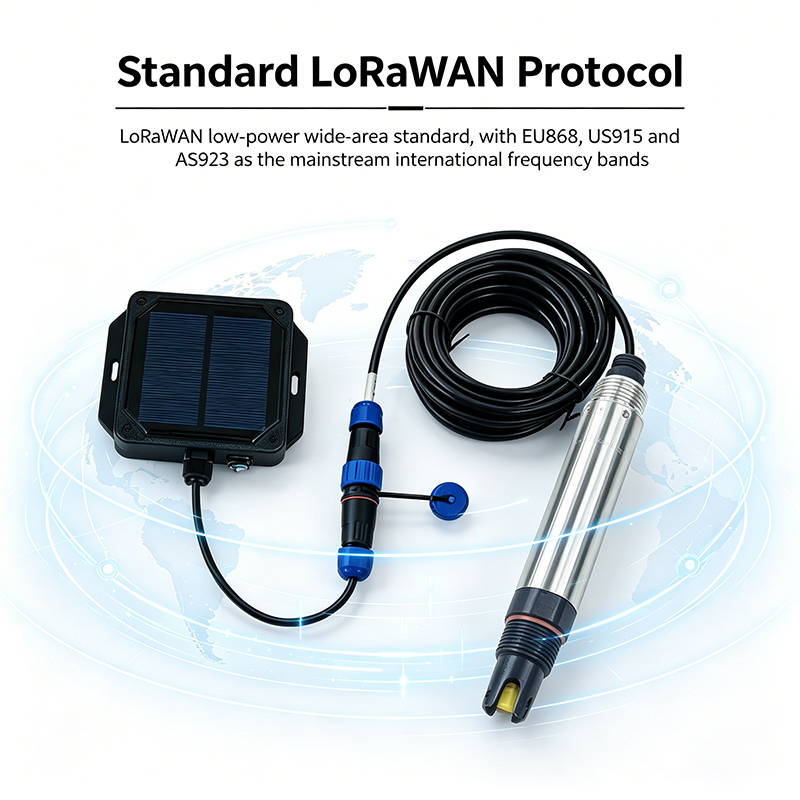
Verify that the supported LoRa frequency bands comply with local regulatory standards (CN470 for China, EU868 for Europe, etc.). Confirm compatibility with the standard LoRaWAN protocol, which determines connectivity with your existing cloud platform. For multi-node networking projects, check gateway capacity and relay solutions to avoid excessive packet loss during long-distance transmission. Require manufacturers to provide field-tested transmission distance data instead of theoretical values.
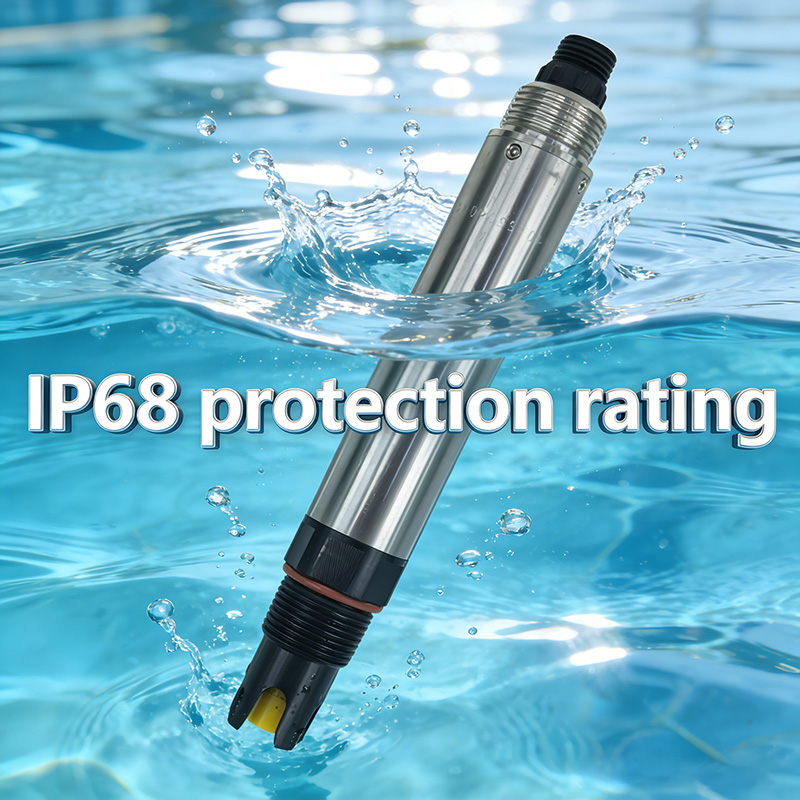
Field water bodies contain abundant sediment and prone to algae adhesion. Probes without auto-cleaning functions may malfunction within just a few days. Prioritize models equipped with mechanical wiper or ultrasonic auto-cleaning systems, and confirm adjustable cleaning cycles. The ingress protection rating must reach IP68 for long-term continuous submersion. Also check whether the operating temperature range covers extreme weather conditions at the project site.
Never rely on verbal promises. Before placing orders, review whether the manufacturer holds ISO 9001 certification and whether products carry international certifications such as CE or FCC (required for export). Contracts must clearly specify: warranty period (a minimum of 2 years is recommended), free calibration times, fault response time (e.g., spare equipment provided within 48 hours), unit prices and lead times of consumables including electrodes. It is advised to purchase 1 to 2 sample units first and conduct on-site testing for more than 15 days to validate data stability and communication reliability before mass procurement.
When calculating total cost of ownership, include expenses beyond the initial equipment price: electrode replacement frequency, solar panel mounting bracket costs, annual gateway and cloud platform fees, as well as on-site labor maintenance costs. Products with slightly higher unit prices often deliver better long-term economic benefits thanks to longer electrode lifespans and lower power consumption.
When purchasing LoRa solar-powered nitrite ion sensors, inspect each technical specification thoroughly as if conducting a full physical examination, and audit suppliers’ service capabilities rigorously. Sufficient pre-purchase research ensures stable operation of your monitoring project and minimizes future maintenance burdens.https://www.zonewuiot.com/lorawan_c14

Tel : +86 18146178586
Whatsapp : +86 18146178586
Email : qui@zonewu.com
Add : 1501-3, Building F03, Phase III, Software Park, Jimei District, Xiamen City, Fujian Province, China