
Categories
New Blog
Selection of LoRaWAN Solar-Powered Water Quality Potassium Ion Sensors: A Multidimensional Game of Communication, Energy and Sensing
April 23 , 2026
When water quality monitoring meets the Internet of Things, equipment selection is no longer as simple as "picking a sensor". For LoRaWAN solar-powered water quality potassium ion sensors, it is more like a multidimensional game spanning communication technology, energy management and sensing principles. Choosing the right solution can enable long-term unattended monitoring; a wrong choice in any link may lead to equipment "inadaptability" or even overall failure.
Water quality monitoring sites are often located in rivers, lakes, aquaculture areas or agricultural irrigation canals far from urban areas and power supply networks. Traditional Wi-Fi and 4G networks either lack coverage or consume excessive power. With an ultra-long transmission distance of over 5 km in urban areas and 15 km in rural areas, as well as milliwatt-level ultra-low power consumption, LoRaWAN technology perfectly resolves this contradiction. The Class A mode of LoRaWAN terminal devices supports ultra-low power consumption operation, with sleep power consumption as low as milliwatt level, enabling long-term continuous monitoring under solar power supply. In addition, the LoRaWAN star networking architecture allows a single gateway to cover a large monitoring area, greatly reducing infrastructure deployment costs.
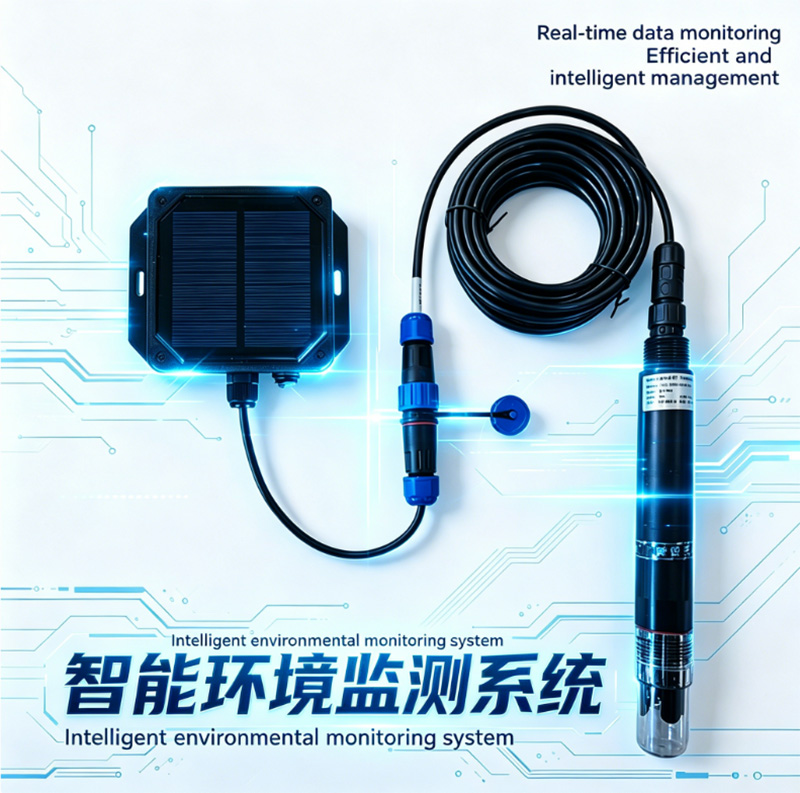
In field environments completely without mains power, the power consumption of sensors directly determines the selection of solar panels and the endurance of the entire system. At present, mainstream LoRaWAN water quality sensors feature extremely low power consumption in sleep mode, with a measured average daily power consumption of only about 450 μW, far lower than traditional wireless transmission schemes. Accordingly, a small solar panel paired with lithium battery energy storage can support the continuous operation of equipment in rainy and cloudy days. In practical applications, a solar panel of more than 60W is sufficient to sustain long-term continuous online monitoring of water quality sensors, achieving true maintenance-free and long service life.
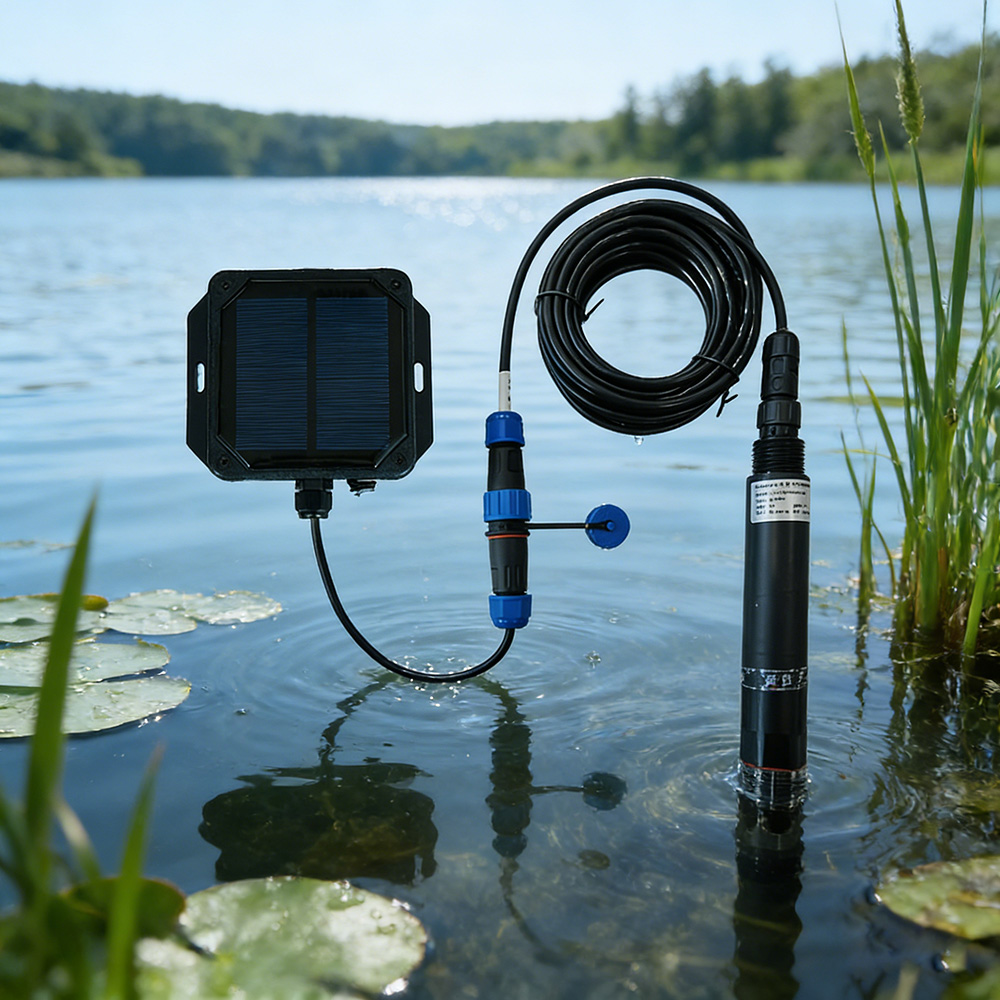
Potassium ion concentration is a critical indicator for evaluating water eutrophication and agricultural non-point source pollution. Mainstream online potassium ion sensors on the market adopt the ion-selective electrode (ISE) principle, calculating concentration through the potential change generated by the potassium ion-selective membrane. The following core parameters should be prioritized during selection:First, measuring range and accuracy. Requirements vary greatly across application scenarios—farmland irrigation water only needs ppm-level accuracy, while scientific research monitoring or high-standard aquaculture requires high resolution of 0.01 ppm. Products on the market have a measuring range from 0.04 mg/L to 39000 ppm and accuracy ranging from ±2% to ±5% F.S., which should be precisely matched according to the actual potassium ion concentration of the water body.Second, anti-interference capability. Potassium ion sensors are susceptible to interference from ammonium ions (NH₄⁺) and cesium ions (Cs⁺), so products with matrix calibration and automatic temperature compensation are more reliable.Finally, interface and protocol. Mainstream products adopt RS485 Modbus/RTU output, facilitating integration with LoRaWAN data acquisition terminals, with power consumption generally between 0.15W and 0.5W, which is compatible with solar power supply systems.
In summary, the selection of LoRaWAN solar-powered water quality potassium ion sensors can be summarized into four core dimensions:
For agricultural irrigation water quality monitoring, potassium ion sensors with a measuring range of 0-1000 ppm and accuracy of ±5% F.S. paired with low-to-medium power solar panels can meet the demand. For aquaculture or industrial wastewater monitoring, products with high resolution (0.01 ppm), automatic temperature compensation and interference calibration are required, and modular designs with lower power consumption and independently replaceable sensor probes are recommended.
There is no "best" standard answer for selection, only the "most suitable" integrated solution. Only by organically integrating the low-power long-distance communication of LoRaWAN, the independent endurance of solar power supply and high-precision potassium ion sensing technology can a long-term stable water quality monitoring system free from frequent maintenance be truly constructed. With the in-depth development of smart agriculture and environmental protection, this integrated solution undoubtedly provides a highly valuable practical path for unattended water quality monitoring.

Tel : +86 18146178586
Whatsapp : +86 18146178586
Email : qui@zonewu.com
Add : 1501-3, Building F03, Phase III, Software Park, Jimei District, Xiamen City, Fujian Province, China