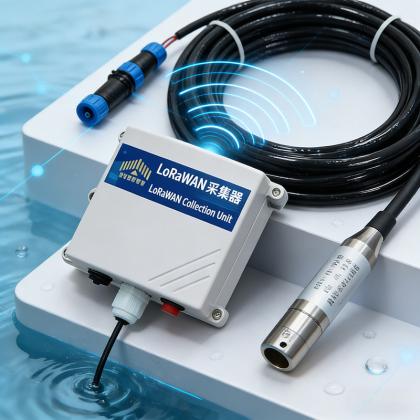
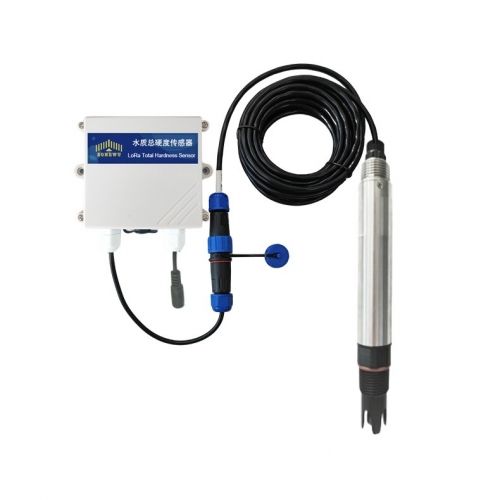
LoRaWAN water quality total hardness sensor is a type of sensor used to test the total hardness of water (measured as CaCO3), with automatic temperature compensation function, low environmental impact, and high measurement accuracy. Connect to the LoRaWAN collector through an aviation connector to achieve wireless communication. Widely used for online automatic continuous analysis and detection of water quality hardness in industrial wastewater, surface water, drinking water, seawater, and industrial production process control.
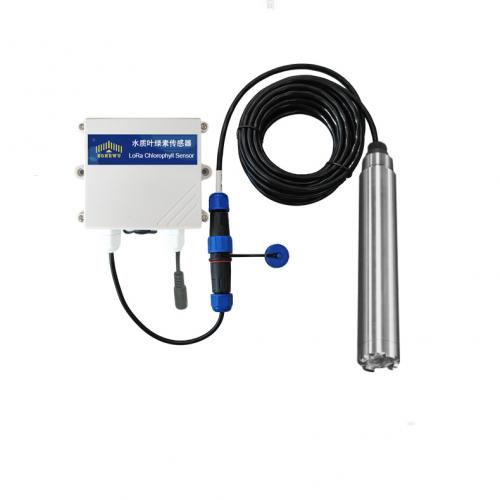
LoRaWAN water quality chlorophyll sensor is a device for measuring chlorophyll concentration in water bodies; The design method of using fluorescence principle and optical fiber to conduct the optical path; Internally added filtering algorithm, with strong resistance to external light interference. Built in temperature transmitter, capable of automatic temperature compensation. The device outputs relative fluorescence units, which facilitates the analysis of the relationship between fluorescence intensity and chlorophyll concentration based on actual conditions.Supports LoRa TDMA networking and standard LoRaWAN protocol.
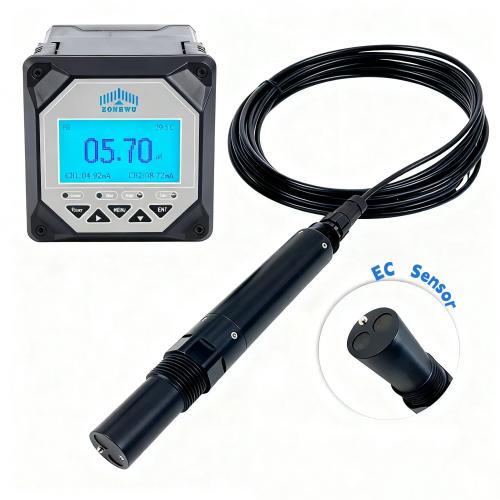
This product is suitable for drinking water, various water supply systems and recirculating aquaculture water. It adopts RS-485 (Modbus RTU protocol) signal output, which can be easily connected with PLC, DCS, industrial control computers, general controllers, paperless recorders, touch screens and other third-party equipment. It adopts 3/4 NPT thread design for submerged installation, which is convenient for installation in pipelines, water tanks and other occasions, with IP68 protection level, and can output conductivity and TDS at the same time.
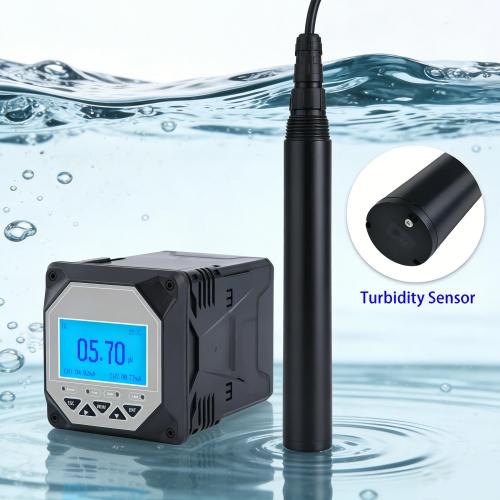
The ZW-TB-PR integrated online turbidity sensor adopts the scattered light detection principle. During operation, a incident light beam penetrates the water sample. Turbidity particles within the sample scatter the light beam. The sensor measures the intensity of light scattered at 90 degrees to the incident path. By correlating the measured data with the built-in calibration standard, the system derives the true turbidity value. Post-processing includes linearization algorithm implementation, ensuring the final output is accurate, stable, and ready for system integration.
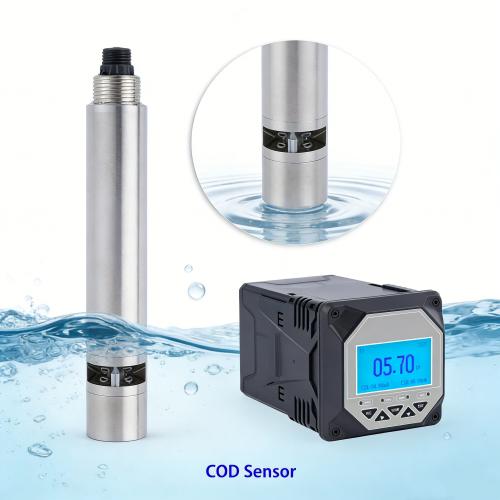
Many organic compounds in water absorb ultraviolet light. The concentration of dissolved organic pollutants can be accurately measured by detecting their absorbance at 254 nm. The ZW‑COD‑PR online COD sensor uses dual light sources: one UV light for COD measurement and one reference light for turbidity compensation. With optical path attenuation correction and algorithm optimization, it effectively reduces interference from suspended particles and provides stable and reliable measurement.
This product is an industrial grade RS485 magnesium ion sensor that uses Modbus RTU digital communication to achieve online magnesium ion concentration meter function. Featuring high precision and corrosion resistance, it is suitable for monitoring magnesium ions in industrial wastewater, softening boiler water, and real-time analysis of water hardness. As a digital magnesium ion probe, it can be directly connected to the automation control system, which is stable and reliable, meeting the long-term operation and maintenance needs of environmental protection and industrial field for online monitoring of water quality magnesium ions.