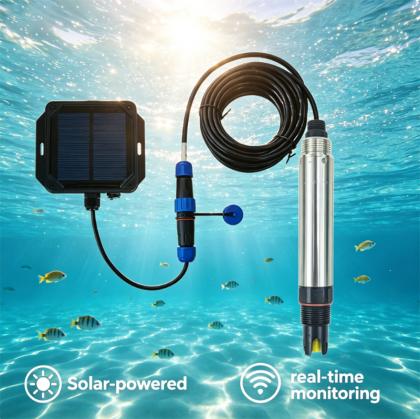
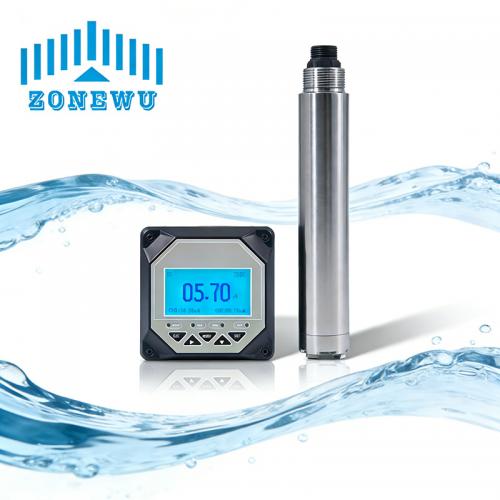
The RS485 fluorescence chlorophyll sensor adopts advanced fluorescence technology and is designed specifically for online water quality monitoring. Built in self-cleaning brush head, effectively preventing biological attachment and achieving maintenance free long-term operation. Supports MODBUS-RTU protocol and can directly output chlorophyll-a concentration data. The IP68 protection level is suitable for freshwater, marine aquaculture, eutrophication monitoring of lakes and rivers, and water source warning. High precision 0-400ug/L range, plug and play, is an ideal choice for in-situ monitoring and environmental protection projects.
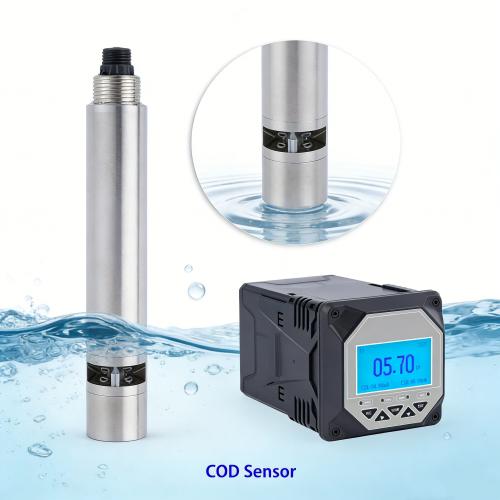
Many organic compounds in water absorb ultraviolet light. The concentration of dissolved organic pollutants can be accurately measured by detecting their absorbance at 254 nm. The ZW‑COD‑PR online COD sensor uses dual light sources: one UV light for COD measurement and one reference light for turbidity compensation. With optical path attenuation correction and algorithm optimization, it effectively reduces interference from suspended particles and provides stable and reliable measurement.
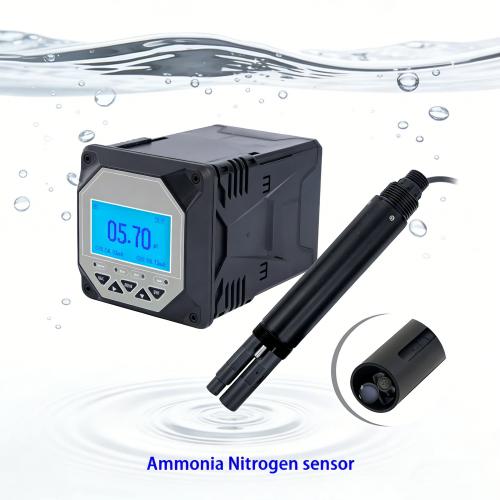
ZW-NHN-PRA is an integrated online ammonia nitrogen sensor based on a PVC membrane ammonium ion-selective electrode. It features real-time temperature compensation for fast, simple, accurate and cost-effective measurement of ammonium ions in water. The sensor supports RS‑485 and Modbus/RTU for easy integration with PLC, DCS, industrial controllers and other third‑party devices. Its patented ion probe with a slow‑leak reference system ensures high stability and extended electrode life. With 3/4 NPT threads and IP68 protection, the sensor enables easy installation in submerged, pipeline or tank environments.
The ZW-BGA-PR fluorescence method blue-green algae sensor adopts high-precision fluorescence principle, which can monitor the concentration of algae in water in real time (0-300Kcells/mL), with a reading accuracy of ± 3% and rapid response (T90<30s). Equipped with automatic temperature compensation and RS485 Modbus output, supports two-point calibration, and does not require frequent cleaning. 316L stainless steel material is corrosion-resistant and suitable for fields such as drinking water, surface water, and aquaculture.
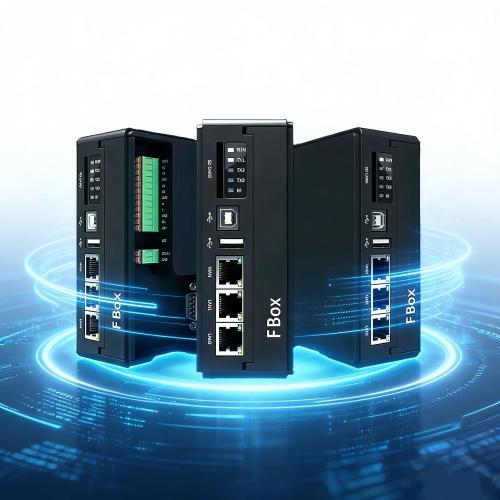
FBOX is a field intelligent data acquisition terminal in the Industrial IoT platform, enabling convenient remote data collection, download, and maintenance of on-site equipment. Supporting over 350 industrial device driver protocols and multiple communication interfaces, it meets networking requirements for most industrial controllers. The system supports various internet access methods and cloud servers. Remote configuration, diagnostics, and management functions can be directly implemented through the remote management platform.
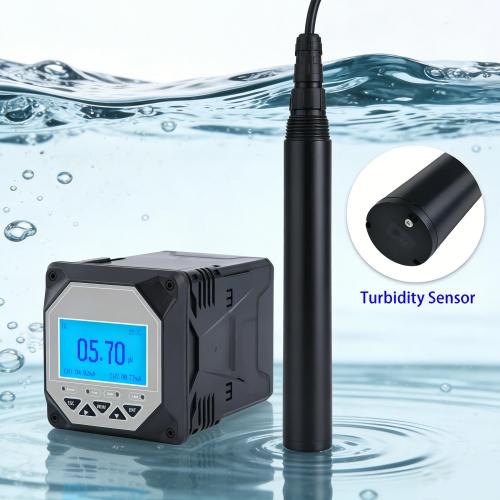
The ZW-TB-PR integrated online turbidity sensor adopts the scattered light detection principle. During operation, a incident light beam penetrates the water sample. Turbidity particles within the sample scatter the light beam. The sensor measures the intensity of light scattered at 90 degrees to the incident path. By correlating the measured data with the built-in calibration standard, the system derives the true turbidity value. Post-processing includes linearization algorithm implementation, ensuring the final output is accurate, stable, and ready for system integration.
This product is specially designed for the continuous online monitoring of residual chlorine in aqueous solutions. It is widely applied in drinking water treatment plants, canning factories, water distribution networks, swimming pools, cooling circulating water systems, and various water treatment projects, ensuring stable and reliable water quality detection.
ZW-ORP-PR industrial-grade online ORP water quality sensor is specially designed for industrial scenarios. It has a measurement range of -1500~+1500mV and an accuracy of ±20mV. It supports RS485 (Modbus/RTU) communication and can seamlessly connect to industrial control equipment such as PLC and DCS. The product is equipped with a patented ORP electrode, whose service life is twice that of conventional electrodes. It has an IP68 high protection rating and a 3/4 NPT thread design, which is suitable for various installation methods. With strong anti-interference ability and fast response, it is widely used in online ORP detection in scenarios such as environmental water quality monitoring, chemical reactions, and industrial production.
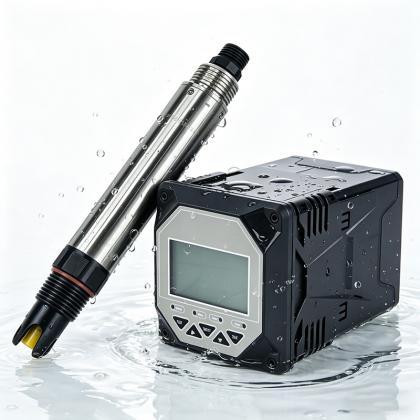
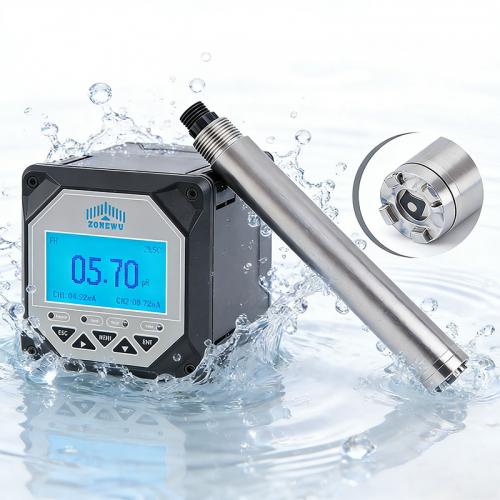
Here’s a polished, professional, and SEO-friendly enriched version for your product description: This product is specially designed for environmental water quality monitoring, the detection of acid, alkali and salt solutions, real-time tracking of chemical reaction processes, and precise monitoring of **industrial production procedures. It delivers stable and reliable performance, enabling accurate online pH measurement to meet the demanding requirements of most industrial applications. With its high adaptability and durability, it effectively supports process control, quality assurance, and environmental compliance across a wide range of industrial scenarios.