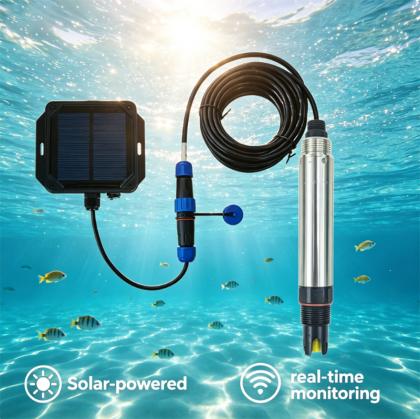
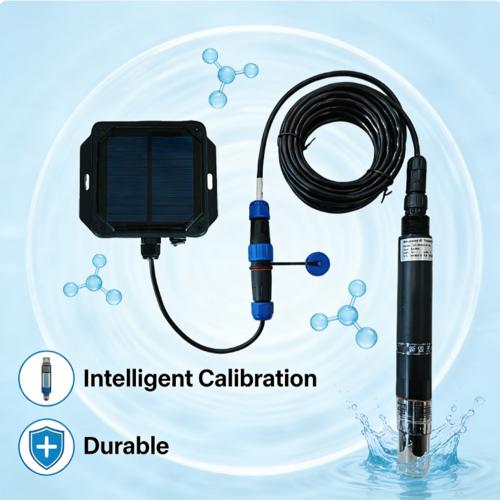
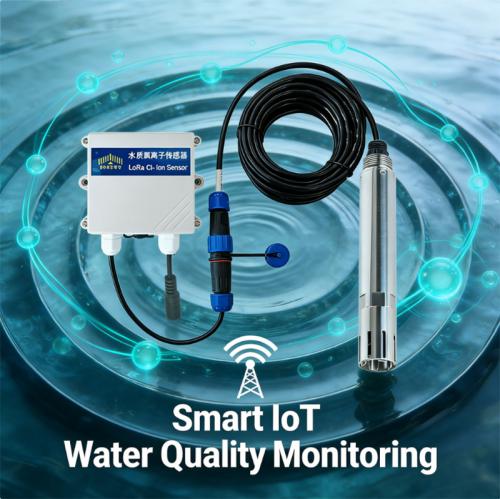
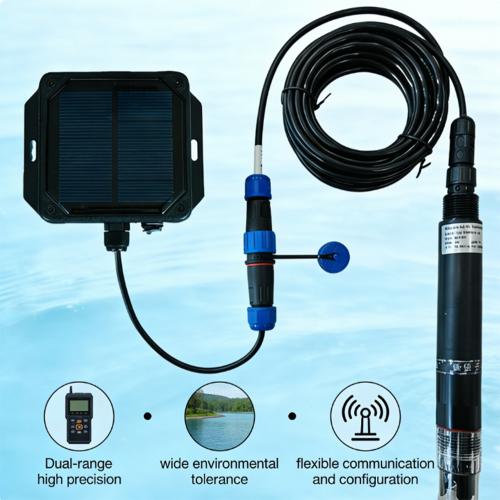
This solar powered water quality chloride ion sensor adopts photovoltaic self power supply and low-power design, which can achieve online continuous monitoring of chloride ion concentration in outdoor water bodies without the need for external power supply. Built in high selectivity solid-state chloride ion electrode, stable measurement, strong anti-interference, supports 4G/LoRa wireless transmission and cloud platform alarm. Suitable for seawater intrusion warning, agricultural irrigation water quality control, industrial wastewater discharge, and drinking water safety assessment. Protection level IP68, no wiring installation, significantly reducing maintenance costs, and assisting in the remote monitoring deployment of smart water management and ecological environmental protection.
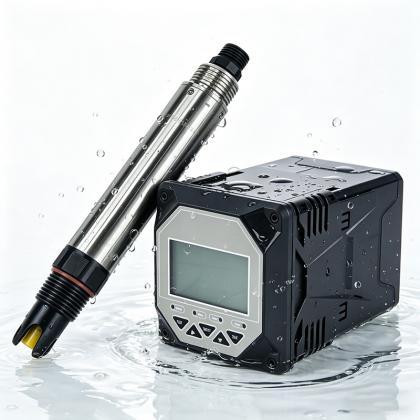
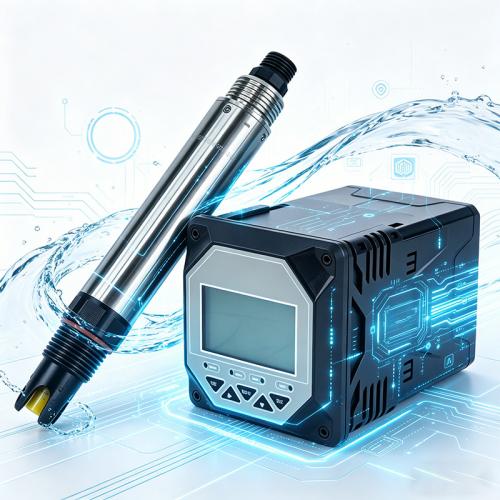
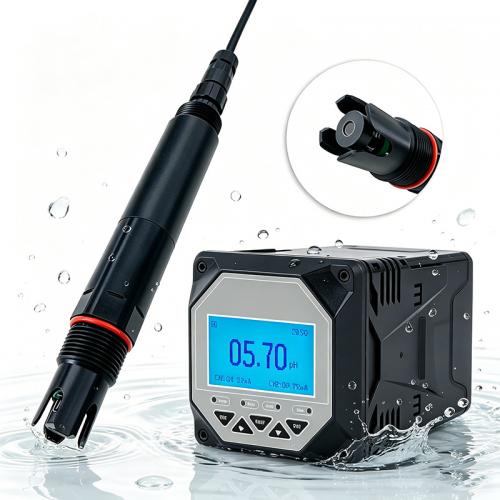
The online nitrite ion sensor adopts PVC membrane ion selective electrode method, designed specifically for online monitoring of nitrite concentration in water quality. The measurement range is 0~2.000 mg/L, with an accuracy of ± 5%, and built-in Pt1000 automatic temperature compensation. Output RS485 (Modbus RTU) signals, which can be easily connected to PLC, DCS, and industrial control systems. The shell is made of 316L stainless steel, with a protection level of IP68, and supports 3/4NPT threaded immersion installation. The sensor has undergone two-point calibration before leaving the factory and has long-term stability, suitable for various working conditions such as pipelines and water tanks.
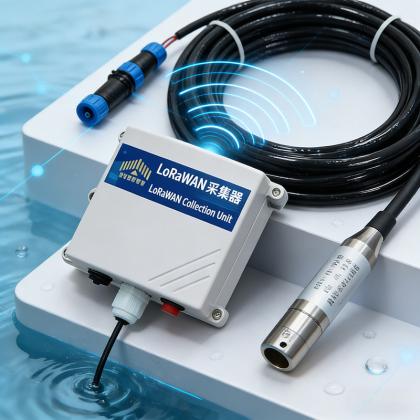
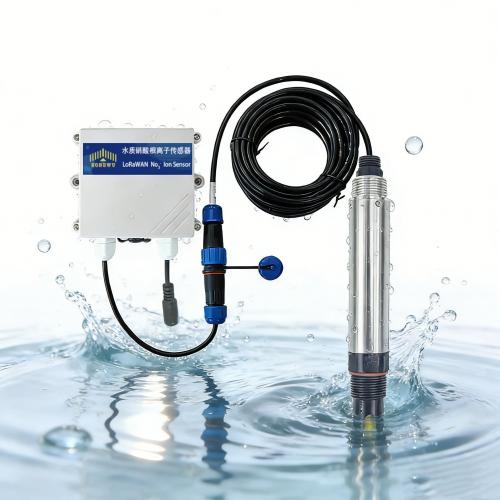
Our LoRaWAN Nitrate Ion Transmitter is a high-performance wireless sensor designed for precise nitrate ion detection in water environments. Built with a reliable PVC membrane selective electrode and automatic temperature compensation, it provides fast, accurate readings with minimal maintenance. Featuring LoRaWAN communication, it enables long-range, low-power data transmission for remote, continuous monitoring. Perfect for use in industrial wastewater treatment, drinking water quality control, surface water analysis and agricultural irrigation systems.
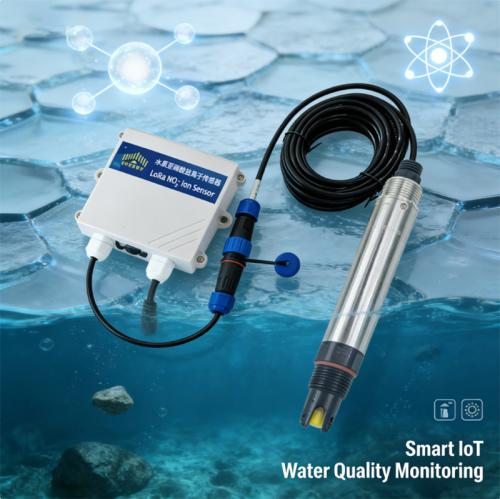
LoRaWAN nitrite ion transmitter, designed specifically for online monitoring of water quality. Adopting PVC membrane ion selective electrode, with a range of 0-2 mg/L, resolution of 0.001 mg/L, accuracy of ± 5%, and integrated Pt1000 automatic temperature compensation. Supports LoRaWAN wireless communication (OTAA Class A/C), with a default reporting period of 10 minutes, long transmission distance, and flexible networking. Widely applicable for detecting nitrite concentration in industrial wastewater, surface water, drinking water, and agricultural process control. The electrode has a lifespan of 1-2 years, supports zero point, slope, and temperature calibration, and is easy to maintain. The equipment is powered by a wide voltage range (DC10-28V), with flexible installation methods, to assist in remote intelligent monitoring of water quality.
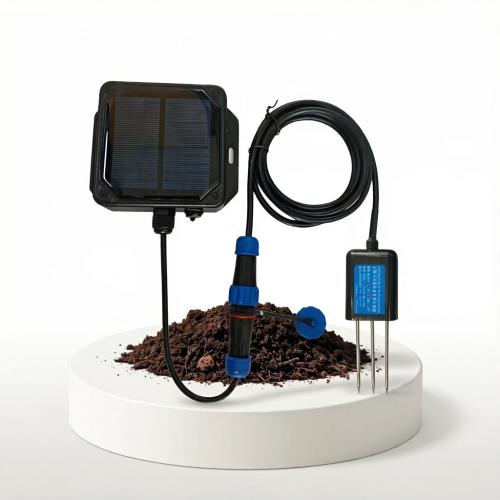
ZONEWU LoRaWAN Solar Powered Multi-Parameter Soil Sensor is a high-precision, low-power soil monitoring device based on LoRaWAN wireless communication technology. Designed for agricultural irrigation, forestry cultivation, ecological monitoring and horticultural planting, it can simultaneously measure soil EC, temperature and humidity in real time. The sensor uploads data to the cloud platform via long-distance wireless transmission, providing users with accurate and efficient soil environment monitoring solutions, and helping to achieve intelligent water and fertilizer management as well as precise environmental control.
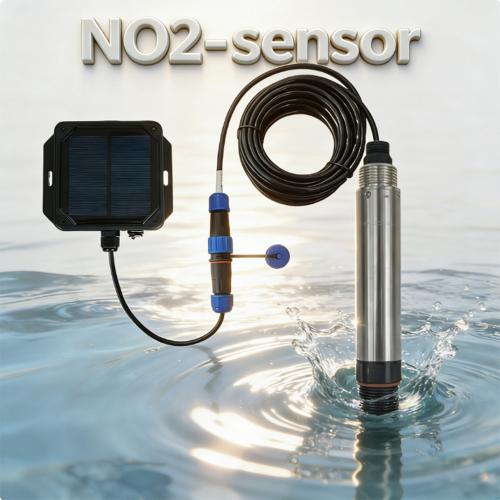
LoRaWAN solar water quality nitrite ion sensor is a wireless water quality monitoring device designed specifically for outdoor scenarios. It is powered by solar energy and has a large capacity lithium battery built-in, which can work for a long time without the need for an external power source. The sensor is based on PVC membrane ion selective electrode, which can accurately measure the concentration of nitrite ions in water (range 0-2 mg/L), and has automatic temperature compensation function. Through LoRaWAN wireless communication (supporting OTAA Class A/C), data can be remotely reported to the platform. The product is widely used for online continuous analysis and process control in industrial wastewater, surface water, drinking water and other fields.
The online chloride ion sensor adopts a highly stable solid-state membrane ion selective electrode, designed specifically for real-time monitoring of chloride ion concentration in water quality. The measurement range covers 0~3500 mg/L or 0~35000 mg/L, with an accuracy of ± 5% of the reading and fast response (T90<60s). Built in Pt1000 automatic temperature compensation ensures accurate data. Supports RS-485 (Modbus RTU) and optional 4-20mA output, making it easy to connect to systems such as PLC and DCS. IP68 protection level, corrosion-resistant POM/316L shell, 3/4 "NPT thread, can be submerged or installed in pipelines. The electrode has a long lifespan, simple calibration, and is suitable for industrial wastewater, surface water, and other scenarios.
This product is a water quality chloride ion sensor using LoRa wireless communication technology, which has the characteristics of low power consumption, long-distance transmission, and strong anti-interference. Real time monitoring of chloride ion concentration in water bodies, data can be remotely uploaded to the monitoring platform through LoRa network without complex wiring, suitable for scenarios such as drinking water, industrial circulating water, sewage treatment, marine environment, etc. The sensor has fast response and high accuracy, supports battery power supply, is easy to deploy in the field or distributed, and helps with water quality safety and intelligent management.
The LoRaWAN solar-powered potassium ion water quality sensor is a wireless water monitoring device specifically designed for outdoor environments. It utilizes a hybrid power supply of solar energy and lithium batteries, eliminating the need for mains power and enabling long-term independent operation. Based on a PVC membrane potassium ion selective electrode, it features automatic temperature compensation, with a measurement range of 0–1000.0 mg/L and an accuracy of ±10% or ±1 mg/L. Supporting LoRaWAN Class A/C protocols, it defaults to a reporting cycle of 30 minutes and boasts a battery lifespan of ≥3 years. Widely applicable for continuous online analysis of potassium ion concentrations in industrial wastewater, surface water, drinking water, and agricultural production, it enables remote, low-power water quality monitoring.